10 Best Refrigerators in the United States (2026) — Buying Guide & FAQs
Choosing a new refrigerator is a bigger decision than it looks. It’s one of the few appliances that runs 24/7, sits in the most visible spot in your kitchen, and is expensive enough that most people only buy one every 10–15 years. Below is a roundup of ten standout refrigerators for 2026 across the categories that matter most — French door, side-by-side, top-freezer, counter-depth, smart, and budget — followed by a full buying guide and FAQ section.
Quick Picks at a Glance
| # | Model | Best For | Style | Approx. Price |
|---|---|---|---|---|
| 1 | Bosch 800 Series B36CT80SNS | Best Overall | Counter-Depth French Door | $3,200–$3,800 |
| 2 | LG French Door (LRFLC2706S) | Best French Door | French Door | $2,000–$2,600 |
| 3 | Samsung Bespoke AI 4-Door Flex | Best Smart Fridge | 4-Door Flex | $3,000–$3,600 |
| 4 | GE Profile Smart Refrigerator | Best Runner-Up Smart Pick | French Door | $2,500–$3,200 |
| 5 | GE Side-By-Side Refrigerator | Best Side-By-Side | Side-By-Side | $1,400–$1,900 |
| 6 | Whirlpool WRT549SZDM | Best Bottom-Freezer Value | Bottom-Freezer | $1,000–$1,300 |
| 7 | Frigidaire Gallery Counter-Depth | Best Counter-Depth Value | Counter-Depth French Door | $1,800–$2,300 |
| 8 | LG Top-Freezer Refrigerator | Best Top-Freezer | Top-Freezer | $700–$1,000 |
| 9 | Kenmore 20 cu. ft. Side-By-Side | Best Budget Side-By-Side | Side-By-Side | $1,000–$1,300 |
| 10 | Hisense Smart Refrigerator (HRM260N6TSE) | Best Value Overall | French Door | $1,300–$1,700 |
Prices are approximate street prices and fluctuate with sales, especially around Presidents Day, Memorial Day, and Labor Day — traditionally strong appliance sale windows.
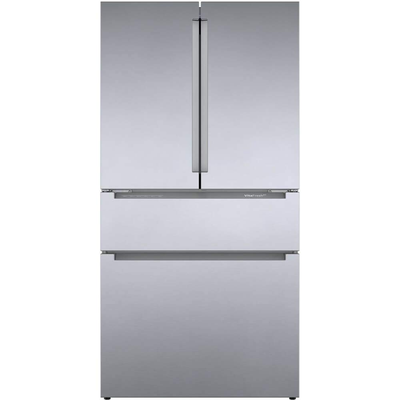
1. Bosch 800 Series — Best Overall
4.3 out of 5 ratings
Bosch’s flagship counter-depth French door model consistently tops independent lab testing thanks to its dual-compressor system, which cools the fridge and freezer compartments independently for more stable, precise temperatures. It’s quiet, has flexible interior storage, and its counter-depth profile gives kitchens a built-in look without the built-in price tag.
- Capacity: ~21 cu. ft.
- Standout feature: Independent dual compressors for precise temperature control
- Watch out for: Bosch’s lower-tier 500 Series lacks this dual-compressor system, so don’t assume all Bosch fridges perform the same
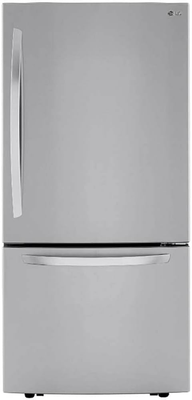
2. LG Refrigerator —
4.5 out of 5 ratings
LG LRDCS2603S 26 CF Bottom Mount, 33″ Wide, Door Cooling, ThinQ is one of the most consistent performers across every refrigerator category, and its French door lineup is the standout. This model is notably quiet, offers generous usable capacity, and LG’s service data shows one of the lowest repair rates of any major brand in the counter-depth French door category.
- Capacity: ~27 cu. ft.
- Standout feature: Door Cooling+ for more even temperature distribution
- Watch out for: Some buyers find LG pricing runs higher than comparable GE or Whirlpool models
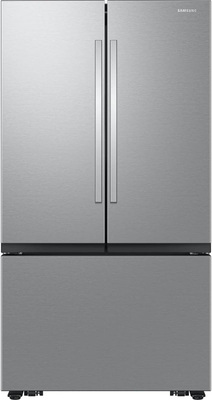
3. Samsung French Door Refrigerator — Best French Door
4.6 out of 5 ratings
Samsung 27 cu. ft. Mega Capacity Counter Depth 3-Door French Door Refrigerator. If you want your fridge to double as a smart-home hub, the Bespoke AI 4-Door Flex is the one to beat. It features a customizable door panel system, a flexible middle compartment that converts between fridge and freezer, and AI-assisted features like food-freshness tracking and grocery reordering.
- Capacity: ~23 cu. ft.
- Standout feature: Convertible FlexZone compartment and companion app integration
- Watch out for: Smart features add cost and are optional extras if you just want reliable cooling
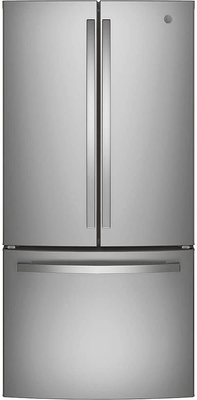
4. GE 24.7 cu. ft. French Door Refrigerator — Best Runner-Up Smart Pick
4.0 out of 5 ratings
GE 24.7 cu. ft. French Door Refrigerator in Fingerprint Resistant Stainless Steel earns the top brand score among side-by-side models in recent Consumer Reports testing and remains one of the most broadly competitive brands across every configuration. The Profile Smart Refrigerator brings that reliability to a French door design with a Keurig-style hot water/coffee dispenser and a Wi-Fi enabled interior camera on some configurations.
- Capacity: ~22 cu. ft.
- Standout feature: Built-in single-serve coffee brewing and hot water dispensing
- Watch out for: Coffee/hot water dispenser add-ons increase energy consumption slightly
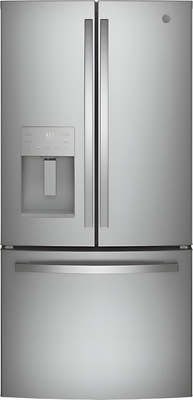
5. GE GYE18JYLFS 17.5 Cu. Ft. French Door Refrigerator
4.6 out of 5 ratings
For narrow kitchens where French doors won’t fully swing open, a side-by-side is often the practical choice, and GE’s version leads the category on reliability and Consumer Reports scoring. Vertical door layout means better organization for tall items, and door bins fit gallon-sized containers.
- Capacity: ~25 cu. ft.
- Standout feature: Tall, narrow doors that work in galley kitchens
- Watch out for: Side-by-side compartments are narrower, so wide platters or sheet pans may not fit
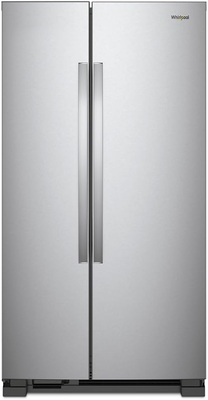
6. Whirlpool — Best Bottom-Freezer Value
4.6 out of 5 ratings
Whirlpool 33 Inch Freestanding Side by Side Refrigerator with 21.72 Cu. Ft.tends to share more engineering between its entry-level and mid-range lines than competitors, so you get solid performance without a big step-up in price. This bottom-freezer model puts fresh food at eye level, which cuts down on bending to find everyday items.
- Capacity: ~19 cu. ft.
- Standout feature: Fresh food compartment at eye level, freezer drawer below
- Watch out for: Fewer high-tech extras than Samsung or GE Profile lines
7. Frigidaire French Door — Best Counter-Depth Value
4.6 out of 5 ratings
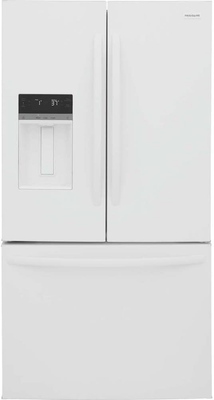
Frigidaire FRFS2823A 36 Inch Wide 27.8 Cu. Ft. French Door Refrigerator with External Ice and Water Dispenser. Frigidaire’s counter-depth Gallery line delivers the flush, built-in look of pricier brands at a noticeably lower cost. A dedicated deli drawer and a built-in water filtration system are nice touches not always found at this price point.
- Capacity: ~22 cu. ft.
- Standout feature: Dedicated deli/snack drawer and multiple LED lighting zones
- Watch out for: Interior finish and shelving feel less premium than Bosch or LG
8. LG Top-Freezer Refrigerator — Best Top-Freezer
Top-freezer refrigerators remain the most budget-friendly, energy-efficient layout on the market, and LG’s version tops Consumer Reports’ brand scoring for this category. It’s a no-frills design that nails the basics: even cooling, quiet operation, and a long warranty.
- Capacity: ~20 cu. ft.
- Standout feature: Strong reliability scores and one of the longest warranties in its class
- Watch out for: No ice maker or water dispenser on base configurations
9. Kenmore 20 cu. ft. Side-By-Side — Best Budget Side-By-Side
3.9 out of 5 ratings
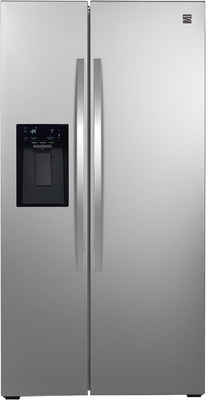
This counter-depth Kenmore delivers the built-in look and side-by-side layout at a price closer to standard-depth models. Fingerprint-resistant stainless steel and spill-proof adjustable glass shelves round out a practical, no-nonsense package.
- Capacity: ~20 cu. ft.
- Standout feature: Counter-depth design at a side-by-side price point
- Watch out for: Kenmore’s retail availability and parts network is smaller than the major brands
10. Hisense Smart Refrigerator (HRM260N6TSE) — Best Value Overall
Hisense has emerged as one of the strongest value plays in the category, delivering smart features and consistent temperature performance for meaningfully less than Samsung or LG equivalents — as long as you’re comfortable with a newer brand name in the U.S. market.
- Capacity: ~26 cu. ft.
- Standout feature: Smart app connectivity and consistent temperatures at a lower price
- Watch out for: Shorter track record for long-term reliability and service network in the U.S. compared to legacy brands
Buying Guide: How to Choose the Right Refrigerator
1. Measure your space first
Before you fall in love with a model, measure the width, height, and depth of your refrigerator opening — and don’t forget door swing clearance and the path from your front door to the kitchen. Counter-depth models (about 24–25 inches deep) sit flush with cabinets but hold less than standard-depth models (up to 36 inches deep).
2. Pick the layout that fits your habits
- French Door: Most popular style; wide fridge section at eye level, freezer drawer below. Great for entertaining and wide items like sheet pans and party platters.
- Side-By-Side: Narrower doors, ideal for tight kitchens where a French door can’t swing fully open. Better for tall, narrow items; less room for wide platters.
- Top-Freezer: The most affordable and energy-efficient layout. A great option if you don’t need bells and whistles.
- Bottom-Freezer: Puts everyday fresh food at eye level; freezer items (used less often) go in a drawer below.
3. Think about capacity realistically
A rough rule of thumb is 4–6 cubic feet per adult in the household, though households that cook frequently or buy in bulk should size up. Don’t forget that quoted “total capacity” includes the freezer, so check the fridge-only capacity if that matters more to you.
4. Decide which features are worth paying for
Ice makers, water dispensers, extra evaporators, and built-in coffee makers all add convenience — and all add to the purchase price and energy use. Prioritize the features you’ll actually use daily rather than everything a model offers.
5. Check energy efficiency
Energy Star-certified refrigerators are evaluated within style, size, and feature categories rather than against every fridge on the market, so a certified model in one category isn’t necessarily more efficient in absolute terms than an uncertified one in another. Still, choosing a certified model within your preferred category is a reliable way to cut long-term electricity costs.
6. Look at brand reliability, not just brand name
Reliability varies more by product line than by brand overall. A manufacturer’s premium line can have a meaningfully different service record than its budget line, so check reviews and service data for the specific model, not just the logo on the door.
7. Time your purchase
Appliance retailers frequently run their best refrigerator discounts around July 4th, Labor Day, and Presidents Day weekend, in addition to Black Friday. If your current fridge isn’t in a critical state, waiting for one of these windows can meaningfully lower the price.
Frequently Asked Questions
How long should a refrigerator last? Most refrigerators are designed to last 10–15 years with normal use and basic maintenance, such as cleaning the condenser coils annually and keeping the door seals clean.
Is counter-depth worth the extra cost? Counter-depth refrigerators cost more per cubic foot of storage because they sacrifice depth for a flush, built-in appearance. If kitchen aesthetics and easier walkway clearance matter to you, it’s often worth it. If you need maximum storage for the lowest price, a standard-depth model is the better value.
Do smart refrigerator features actually help? Features like interior cameras, food-freshness tracking, and app-based temperature control can be genuinely useful for reducing food waste and monitoring your fridge remotely. However, they’re not essential to a refrigerator’s core job of keeping food cold, so weigh the added cost against how much you’ll realistically use them.
What’s the difference between a French door and a side-by-side refrigerator? French door refrigerators have two narrower doors that open outward to reveal a full-width fridge compartment, with a freezer drawer below. Side-by-side models split the fridge and freezer vertically, with narrower doors on each side — a practical choice for kitchens where a wide French door can’t fully open.
How much should I budget for a new refrigerator? Basic top-freezer models start around $600–$900. Mid-range French door and side-by-side models typically run $1,200–$2,000. Premium counter-depth and smart refrigerators can run $2,500–$4,000 or more.
Does a bigger refrigerator use more energy? Generally yes, but the relationship isn’t purely about size — added features like ice makers, water dispensers, and extra evaporators also increase energy consumption. Two refrigerators of the same size can have meaningfully different energy use depending on their feature set and compressor design.
Should I buy an extended warranty? Manufacturer warranties typically cover parts and labor for the first year, with some components (like the compressor) covered longer — often 5 or 10 years, depending on the brand and model. Whether an extended warranty is worth it depends on the specific brand’s reliability record and how the plan is priced; check independent reliability data for your specific model before deciding.
What should I do with my old refrigerator? Many retailers offer free haul-away when you buy a new refrigerator from them. Alternatively, most utility companies run appliance recycling rebate programs that pay you a small amount to recycle an old, working refrigerator, since removing inefficient units from the grid reduces overall energy demand.
This guide reflects publicly available product and testing information as of 2026. Prices, availability, and specific model numbers change frequently — always confirm current pricing and specs with the retailer before purchasing.