7 Best Microwave Ovens in the USA (2026): Buying Guide & FAQs
Choosing a microwave sounds simple until you’re staring at a wall of countertop, over-the-range, and smart models with wildly different wattages and price tags. To make the decision easier, we’ve rounded up seven standout microwaves for 2026 — covering budget picks, premium smart models, and space-saving over-the-range units — along with a buying guide and answers to the most common questions shoppers ask.
Quick Comparison
| Microwave | Type | Capacity | Wattage | Best For |
|---|---|---|---|---|
| Panasonic NN-SN68KS | Countertop | 1.2 cu. ft. | 1200W | Best overall |
| Breville Smooth Wave (BMO850BSS) | Countertop | 1.2 cu. ft. | 1250W | Best smart features |
| Toshiba EM131A5C-BS | Countertop | 1.2 cu. ft. | 1100W | Best budget |
| BLACK+DECKER EM925AB9 | Countertop | 0.9 cu. ft. | 900W | Best under $100 |
| LG MHEC1737F | Over-the-range | 1.7 cu. ft. | 950W | Best over-the-range |
| KitchenAid KMMS330SPS | Over-the-range | 1.5 cu. ft. | 950W | Best OTR runner-up |
| Whirlpool WMH31017HZ | Over-the-range | 1.7 cu. ft. | 1000W | Best large-capacity OTR |
1. Panasonic — Best Overall
4.7 out of 5 ratings
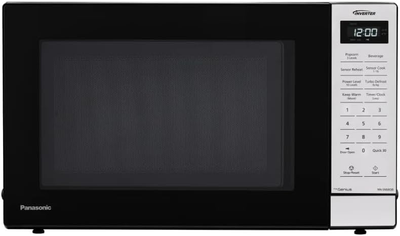
Panasonic’s inverter-driven keeps showing up at the top of “best overall” lists, and for good reason. Its 1200-watt output combined with true Inverter Technology delivers steady, consistent power instead of the on/off cycling older microwaves rely on, so food heats more evenly without turning rubbery at the edges. Sensor cooking automatically adjusts time and power based on the humidity given off by food, taking the guesswork out of reheating.
Why it stands out: Strong, evenly distributed heat plus dependable sensor cooking at a reasonable mid-range price. Consider skipping if: You want smart-home or app connectivity — this model keeps things straightforward.
2. Breville Smooth Wave (BMO850BSS) — Best Smart Features
4.7 out of 5 ratings
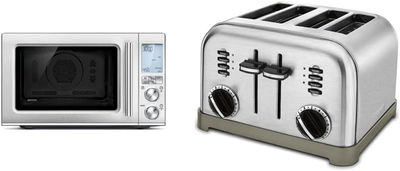
The Breville Smooth Wave is built for people who want a “set it and forget it” experience. Its Sensor iQ technology detects steam released from food and automatically calculates cooking or reheating time, while the Power Smoothing Inverter replaces the old on-off power cycle with smooth, continuous power delivery for more even results. It also ships with 15 built-in presets (popcorn, potatoes, rice, oatmeal, and more), a soft-close door engineered to be noticeably quieter than standard microwaves, and a child lock.
Specs: 1.2 cu. ft. capacity, 1250 watts, stainless steel, around $399–$400. Why it stands out: Genuinely useful automation (Smart Cook, Smart Reheat, Smart Defrost) and one of the quietest microwaves on the market. Consider skipping if: Budget is the main priority — this is a premium-priced countertop model.
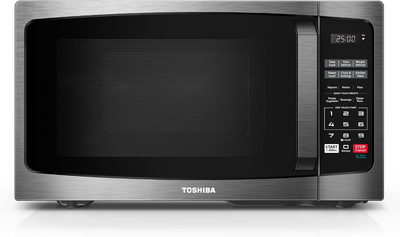
3. TOSHIBA Microwave 900W — Best Budget Pick
4.5 out of 5 ratings
The Toshiba proves you don’t need to spend a lot to get reliable performance. It heats quickly and evenly, and includes preprogrammed settings for popcorn, baked potatoes, pizza, frozen vegetables, beverages, and full dinner plates. It’s also one of the most reviewed microwaves on the market, with a strong average rating across tens of thousands of Amazon reviews.
Why it stands out: Excellent value — even heating and handy presets at a genuinely low price. Consider skipping if: You want automatic sensor reheating; this model relies on presets and manual timing rather than humidity sensors.
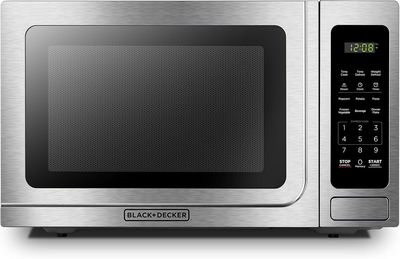
4. BLACK+DECKER — Best Under $100
4.7 out of 5 ratings
For dorm rooms, small apartments, or a secondary microwave, the BLACK+DECKER is hard to beat. It’s compact enough to sit above a range or on a countertop, has a lit interior so you can watch food cook, and includes multiple food presets despite its low price.
Why it stands out: Sleek, space-saving design and interior lighting at a genuinely budget price point. Consider skipping if: You need a louder alarm — some users find the completion beep too quiet to hear from another room.
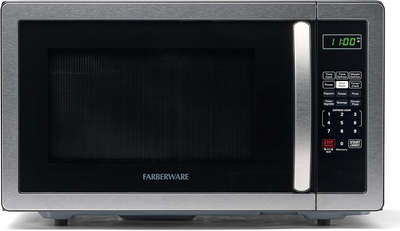
5. Farberware Microwave Oven — Best Over-the-Range
4.5 out of 5 ratings
Farberware 1.1 Cu. Ft. Countertop Microwave Oven: Whip up meals in seconds with 1,000 watts of dependable power. Built for effortless cooking, this compact microwave features 10 power levels, multi-stage cooking, and six convenient one-touch presets for favorites like popcorn, pizza, and potatoes. Need to thaw ingredients? Custom weight and time defrost settings get the job done fast.
Designed for maximum efficiency in a space-saving footprint, its 1.1 cu. ft. capacity offers full-sized performance with a hassle-free, easy-to-clean finish—ideal for apartment kitchens, breakrooms, or dorms.
Why it stands out: Combines strong heating performance with genuinely quiet operation — a common weak point for OTR models. Consider skipping if: You don’t have a vent hood setup or don’t want to deal with the more involved installation OTR units require (often needing an electrician).
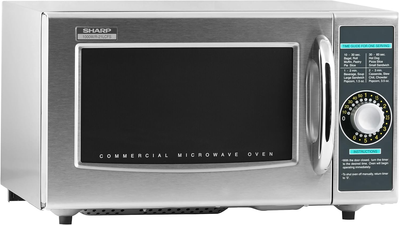
6. Sharp Microwave Oven — Best OTR Runner-Up
4.6 out of 5 ratings
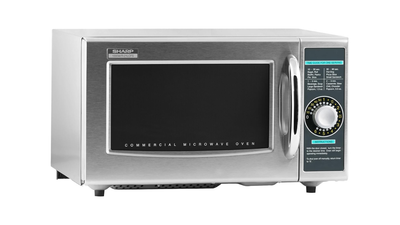
The Sharp R-21LCFS Medium-Duty Commercial Microwave Oven combines user-friendly operation with heavy-duty performance. It features a classic 10-second to 6-minute dial timer paired with high-visibility LED indicators for quick status checks. Its generous 1.0 cu. ft. stainless steel interior comfortably fits 13.5-inch platters, prepackaged meals, or half-size pans. Designed for commercial efficiency, the auto-cancel timer clears remaining cook time as soon as the door opens, saving power and protecting the magnetron, while the full stainless steel body ensures long-lasting durability and easy maintenance.
Why it stands out: Top-tier heating evenness and defrosting performance. Consider skipping if: Long-term reliability is a top priority — Sharp Microwave Oven have scored only middling marks in owner satisfaction and reliability surveys.
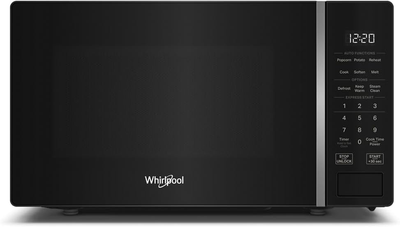
7. Whirlpool — Best Large-Capacity OTR
4.6 out of 5 ratings
For bigger households, the Whirlpool offers a spacious 14-inch turntable that can accommodate a full baking dish (think mac and cheese or a casserole) — and you can turn the turntable off if a dish is too large to rotate. Sensor cooking and preprogrammed pads handle everything from cooking bacon to softening ice cream, cutting down on the guesswork.
Why it stands out: Genuinely useful size for families, plus fast, even cooking performance reviewers consistently praise. Consider skipping if: You have a smaller kitchen — the larger turntable and cavity take up more vertical space above your range.
Buying Guide: What to Look for in a Microwave
1. Countertop vs. Over-the-Range vs. Built-In
- Countertop models are the most common, easiest to install (just plug it in), and the most affordable.
- Over-the-range (OTR) microwaves mount above your stove, freeing up counter space and often doubling as a range hood/vent — but installation is more involved and may require an electrician.
- Built-in models are installed into cabinetry for a seamless look, typically at a higher price point.
2. Capacity vs. Usable Space
Manufacturers advertise total interior volume, but independent lab testing has found that real usable capacity in most microwaves is typically only slightly above half of the advertised figure once you account for the turntable and rounded corners. If you regularly heat large plates or casserole dishes, look for at least 1.5 cu. ft. of advertised capacity — and don’t assume the full number will translate to standing-dish space.
3. Wattage
Wattage determines cooking speed:
- 700–900W: Fine for reheating drinks, small plates, and basic tasks; slower for larger meals.
- 1000–1200W: The sweet spot for most households — fast, even cooking for full meals.
- 1200W+: Best for large families or frequent use of frozen/dense foods.
4. Inverter Technology
Traditional microwaves cycle power on and off at full strength to simulate lower power levels, which can leave food overcooked at the edges and cold in the middle. Inverter models deliver a continuous, adjustable stream of power, resulting in more even heating and better defrosting — especially noticeable with meat and delicate dishes.
5. Sensor Cooking
Sensor-equipped microwaves detect the humidity or steam released by food and automatically adjust time and power, removing the guesswork of manual timing. This is especially useful for reheating leftovers, since overcooking is one of the most common microwave complaints.
6. Noise Level
Noise levels vary more than most shoppers expect — both the microwave itself and, for OTR models, the exhaust fan. If you’ll be using the microwave early in the morning or late at night, look for models specifically noted for quiet operation or soft-close doors.
7. Extra Features
- Convection cooking: Adds baking/roasting capability, useful mainly in OTR and higher-end models.
- Preset programs: Buttons for popcorn, potatoes, pizza, beverages, and similar common foods.
- Child lock: Worth prioritizing in households with kids.
- App/smart connectivity: Available on some premium models, though not essential for most users.
Frequently Asked Questions
How many watts do I need in a microwave? For most households, 1000–1200 watts is the ideal range — powerful enough to cook full meals quickly and evenly without being overkill. Smaller households or those mainly reheating drinks and snacks can get by with 700–900 watts.
What’s the difference between an inverter microwave and a regular one? A standard microwave simulates lower power settings by cycling full power on and off, which can cause uneven cooking. An inverter microwave delivers a steady, adjustable power stream, resulting in more even heating and better results when defrosting or cooking at lower power levels.
Is an over-the-range microwave worth the extra installation hassle? If counter space is limited, yes — an OTR unit frees up valuable counter real estate and can double as your range’s exhaust vent. The trade-off is a more involved installation (often requiring an electrician or a dedicated circuit) and generally a higher price than a comparable countertop model.
Do more expensive microwaves actually cook better? Not always. Independent testing consistently finds that some budget models (in the $100–$150 range) perform just as evenly as much pricier units. Higher price tags usually buy you extra features — sensor cooking, quieter operation, convection, and smart presets — rather than dramatically better raw heating performance.
How much usable space does a microwave really have? Less than the advertised number. Lab testing has found that the real usable capacity of most microwaves — both countertop and over-the-range — is typically only slightly more than half of the manufacturer’s stated volume, largely due to the turntable and rounded interior corners.
What size microwave do I need for a family of four? Look for at least 1.2–1.7 cu. ft. of advertised capacity, which comfortably fits standard dinner plates and mid-size casserole dishes. Families who frequently reheat large batches of food may prefer the larger end of that range.
Are cheap microwaves ($100 or less) reliable? Many budget models hold up well for basic use and carry strong customer ratings, especially from established brands like BLACK+DECKER and Toshiba. They typically lack advanced sensors and convection cooking but perform the core job — heating and defrosting — reliably.
Prices and availability are approximate and can change; check current retailer listings before purchasing.